

 Tweet
Tweet
Great article, if you're a punter there is much to learn from this guy.
Kingsley Bartholomew is a rock star in the world of gambling, where followers seek his advice for a winning edge. His main tip? Learn to deal with the losses.
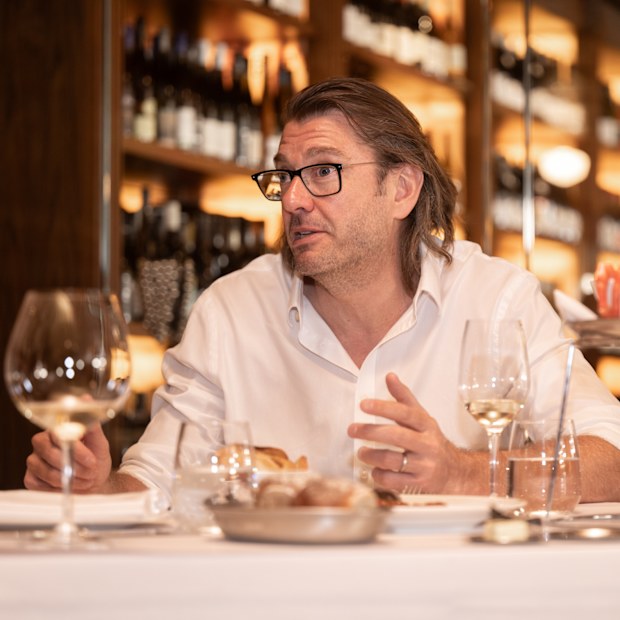
Kingsley Bartholomew is not a household name, but it is also not the kind one might easily forget. In the world of punting, to which he has dedicated his life, everybody knows it.
I witnessed his fame at an annual horse racing lunch known as Call of the Card, four weeks before we were due to meet. Run by Racing Victoria, the event is a way for punters to place mammoth bets at better odds with a select group of bookmakers before the Melbourne Cup. Bartholomew was the talk of the room, interviewed by broadcaster Racing.com and surrounded every time an opportunity came for someone to talk to him.
Bartholomew was of particular interest to punters that day because he was trying to win $1 million on the Melbourne Cup (he ultimately didn’t win anything via Call of the Card, despite placing more than $300,000 across five horses).
But his popularity extends well beyond the nerdiest of horse racing types. His 18-year-old daughter, Maddison, once came home from a party baffled when a group of boys started referring to her dad as the GOAT (greatest of all time).
His X account, @TheKingZoneForm, has more than 10,700 followers and his YouTube channels, Wolfden and The King Zone, have 33,500 and 4050 subscribers, respectively. People follow the bets Bartholomew makes, but crucially, they learn how to bet smarter.
Bartholomew’s business is built on a methodical wagering system and a tolerance for losing – an important trait, given he loses more bets than he wins. But he wins more money than he loses, and at one point was turning over $1 million on Saturdays. And for a man who makes his living by gambling, he has strong views on its potential to cause harm.
I was pleasantly surprised that Bartholomew accepted my Lunch with the AFR invitation. After a failed attempt to lock in a favourite, Cafe Sydney, he chooses Felix, the Parisian-style brasserie that forms part of the ever-expanding Justin Hemmes empire. We meet on a busy Tuesday before Christmas.
I arrive first and select an outside table, thinking it separates us from the crowd and is brighter than the dimly lit interiors of Felix. Within half an hour, though, the sun creeps over Bartholomew, making it unbearably hot for him and creating problematic glare for photographer Louie Douvis, who promptly requests we move inside.
To his credit, 50-year-old Bartholomew, dressed in a white button-up shirt, jeans and loafers, doesn’t complain once.
We sat down to our entrées (they arrived within five minutes of ordering), his glass of André Vatan “Les Charmes” sauvignon blanc and my glass of the 2023 Château de Fleys chablis chardonnay in front of the restaurant’s extensive wine cellar. We’ve opted for the crevettes – tiger prawns with marie rose sauce – and the hand-cut steak tartare. Both are gone within minutes, and our table is moved again, this time to avoid being caught in the waiters’ thoroughfare.
The mix of business types around us is far from the world Bartholomew grew up in. He spent his early life in Gosford on the NSW Central Coast. His parents loved to gamble on horses and greyhounds and would take him, his older brother, Sean, and sister, Vikki, to races on weekends.
Bartholomew barely finished school. He wanted to get into sports journalism but didn’t have the marks (he had a tertiary entrance rank of 30). His attempts to enter real estate also failed. His last option was to work at the races, where he began with a man named Warren Woodcock. He was 17 and has not left the industry.
“I loved it, I was passionate. Plus, I saw it as an opportunity to make money, and that’s always a big driver,” he says. “I thought this was my f---ing only hope.”
Things started slowly. When he was in his early 20s, his winnings would reach about $40,000 before he lost the money. That happened three or four times before he hit two superfectas (the first six horses in order) in two weeks.
“I don’t remember the percentage breakdown of how much I put in, or anything like that,” he says. “But what I do remember is I won $200,000, and that really gave me the kick.”
Early in his career, Bartholomew had a sign on his computer that read: “I must not bet too big.” Like most punters, he has a risk appetite. But he also knows that if he follows his own rules and modelling, he will win. Sometimes, his overconfidence has gotten the better of him.
“If you’re not sticking to rules, you’re not giving yourself the best chance to win,” he says. “It’s about having discipline and structure. That’s when I get upset with myself … if I f---ed up and went too hard and lost too much money.
“If I could give anyone advice it would be: believe in yourself, set limits and structure around what you’re doing in gambling. You’re not going to win all the time – you have to be realistic.”
Bartholomew says he has lost more bets than he has won in his career, but he’s made more money than he’s lost. “I’ve basically never had a losing year gambling,” he says.
You must have a patient wife, I say. He smiles. Bartholomew’s wife, Aynsley, has ridden the highs and lows since they met when he was 23. He moved into her place soon after they started dating.
“She just says one thing to me – as long as we can pay our bills, I don’t care what you do,” he says. “She just trusts that I’m sensible enough not to come home one day and go, ‘We’re selling the house’. We started with nothing, so she doesn’t put any pressure on.”
I can also think of another reason why she is relaxed: Bartholomew is disciplined and methodical in the way he places bets. He learnt most of how to place bets from Sean, with whom he worked until 2007. Sean taught him about the value of odds and the dividend or return they would get on the stake they placed. In their early years, they had a model based on six or seven factors.
Bartholomew loves researching markets and statistical analysis, which are critical if you want to find an edge. Poring over historical data and video footage often shows him what the public is undervaluing or missing.
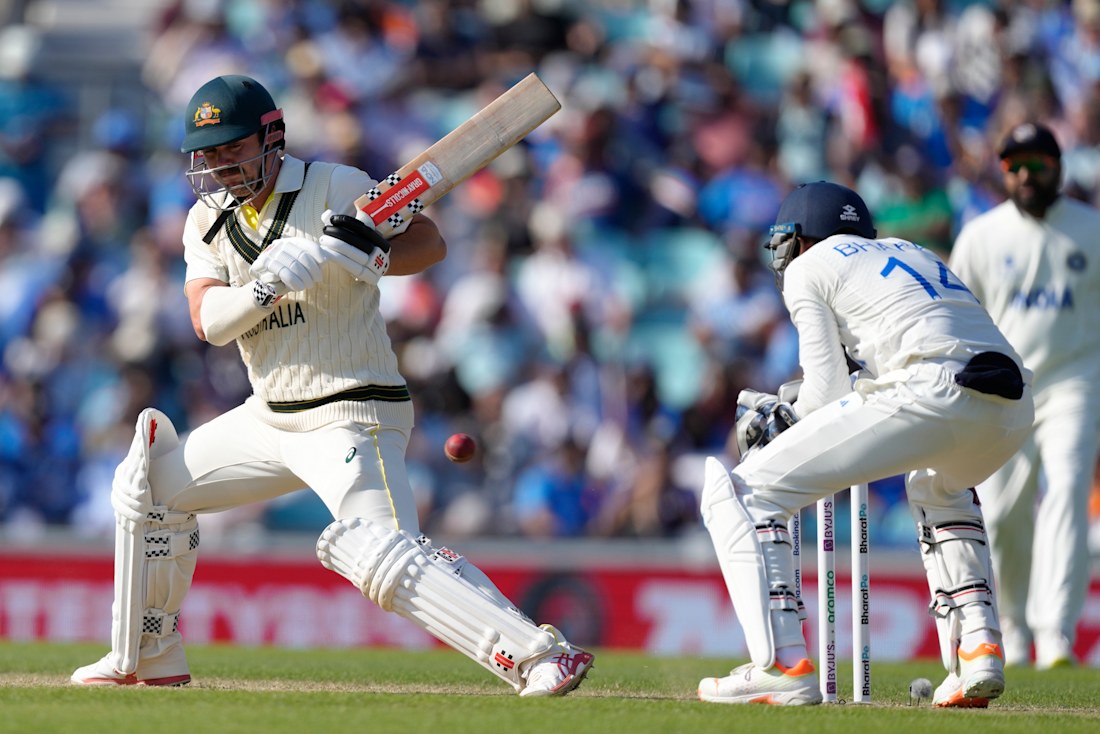 Bartholomew has made most of his money on horses, but he enjoys betting against Indian fans on cricket. Kirsty Wigglesworth
He works with a team of full-time programmers and developers, analysing data and creating technologies that improve their chances of winning. Bartholomew calls it a seven-day grind to beat the bookies.
“I’ll look at every single aspect of a horse – if it’s wearing blinkers for the first time, where it settles in the run, how that is conducive to track configuration,” he says. “A track like Flemington, with its big straight, will suit horses that settle further back in the field and can get cover and peel off.”
He thinks AI will dramatically change the way punters approach a bet, with a lot of the manual methods used becoming obsolete. But he says there will still be an opportunity to win. “The edges are going to be harder to find, but if you’ve got the imagination, you will find them.”
Unlike mediocre punters, including me, Bartholomew doesn’t have access to inducements or sports multi-bets (betting on several outcomes such as tries scored or total points in a single event). Corporate bookmakers like Sportsbet also limit how much money he can place on any one thing. Such restrictions are because he has won too much.
He places his sports bets on Betfair, an exchange that allows you to bet against another person, rather than a bookmaker. There are no bet restrictions, and liquidity depends on how popular an event is and how much others are willing to bet. Betfair takes a commission from the process.
Away from horse racing, Bartholomew prefers to bet on National Rugby League games or cricket, although he finds these sports difficult to model due to the smaller sample sizes and the unpredictability of players’ performances.
He still gambles seven days a week, but he places fewer bets than he used to, for two reasons: the odds aren’t as good any more, and he is physically restricted from gambling large sums of money by corporate bookmakers.
“I love trading on cricket matches and tennis matches, mainly on Betfair. I love sitting down and trading, taking a position and then trading in and out, which you can’t do on horses,” he says.
“There’s a lot of Indian money on Betfair. Indians are crazy about cricket.”
It’s been over an hour, and Bartholomew is in the depths of telling me how many professional punters there are in Australia who bet every day (about 10, he reckons) before we get distracted by the Murray cod on Felix’s menu. He assures me the fish, with basil, tomato, red capsicum, lemon and olive oil, is beautiful, before pivoting to the best crumbed fish he’s ever tasted (at Neil Perry’s new Italian restaurant, Gran Torino, in Double Bay).
I decide to trust Bartholomew’s judgment and order the cod too. We add fries (obviously) and Dutch carrots for the appearance of healthy eating. Bartholomew also puts himself in rare company with AFR Weekend guests by ordering another glass of wine. I join him. Bartholomew may be confident about his lunch choices, but he approaches his investments in the same way he does his job – as a gamble.
“I’ll research … I’ll back-test the model and know how far I can push it and what degree of overlay I need to make it profitable,” he says.
That begs the question: what else has he invested in? Plenty. There has been a coffin business (it went broke), a packaging business, property developments and the sharemarket. He’s also bought horses, but ended up losing money because he bet far too much on them winning.
Except for property, most of Bartholomew’s non-punting bets have not paid off.
“One thing I have done is I’ve learnt to say no,” he says.
At one point, Bartholomew was turning over $1 million on a Saturday, but these days, he says, it is more like $200,000.
“My profit isn’t as big as it used to be. My form is actually better than it’s ever been, but it’s because I can’t turn over the money that I used to.”
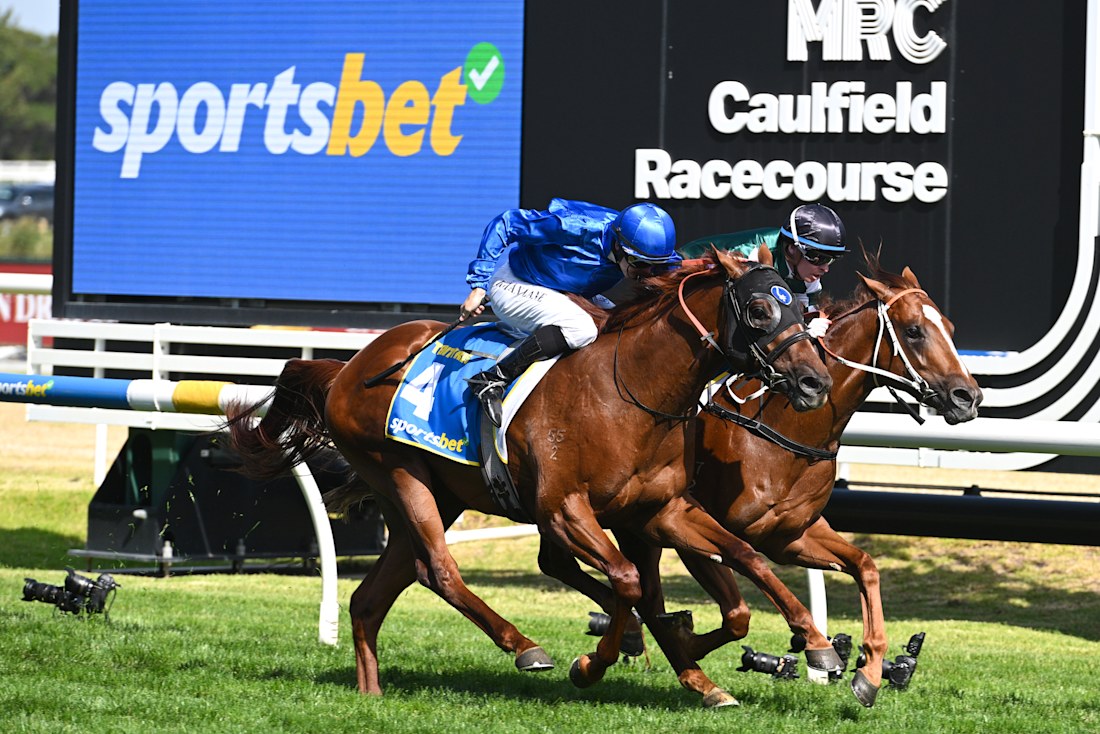
He blames his predicament on two things: the restrictions on his bets, and how taxes on bookmakers have changed the market.
Australia is a low-margin market for bookmakers. The sector is pressured on different fronts, which makes it difficult to offer long odds and invest in new products and technology for punters.
A note from JPMorgan this month said Sportsbet and Ladbrokes have dramatically increased over-rounds over the past 18 months. The over-round is the margin bookmakers build into betting odds, and they have continued to rise over the past 18 months as operators prioritise revenue and profit over turnover. This affects how much a customer wins and the chances of a profit over time.
A few things are driving this shift, but the biggest is pressure from increases in point of consumption tax – fees paid to state and territory governments for customers’ use of bookmakers in the respective states.
Fees paid to sports bodies that allow punters to gamble on products have also made margins tight, as have new measures to minimise gambling harm, such as credit card deposit bans.
This means professional punters can’t make much from the Australian market, but it also means punters are losing more as corporate bookmakers try to make a profit. Bartholomew is considering a move overseas to a more favourable market once his children finish school, but for now, he has set up two businesses to diversify his income and help younger generations learn how to lose less and enjoy punting.
One is Wolfden, which attempts to replicate a betting ring where people share tips and information and talk about their ideas. It is free and has about 70,000 subscribers. With Wolfden, Bartholomew spends a lot of time talking about dealing with losses and teaching people how to stake bets properly.
“I’m used to losing, and after doing it professionally for 25 years, you build up a certain resilience where you don’t worry about wins and losses,” he says.
The second is The King Zone, a paid betting education and tools service for would-be professional punters that offers information on every race meeting in Australia each week. Bartholomew says it is profitable but costs a fair bit to produce.
He wants to get The King Zone on a big screen in pubs across Australia. The first is at the Royal Oak in Sydney’s Double Bay. ASX-listed Tabcorp has the retail licences in NSW and other major Australian states. The company’s chief executive, Gillon McLachlan, has pivoted the bookmaker’s strategy to improving the retail experience and has overhauled the commercial relationship with pubs to achieve that.
Bartholomew says he would like to work with Tabcorp to improve the experience in pubs and clubs.
“I’d like to … provide some quality information that helps punters make more of an educated decision around what they’re backing,” he says.
“Are they going to sit there and back every winner? Well, I hope so, but the reality is no. But sometimes it’s just about losing less and being able to stay in the pub for the whole day rather than staying there for an hour.”
The challenges for corporate bookmakers may be exacerbated when Communications Minister Anika Wells decides to implement a long list of recommendations from the online gambling inquiry into minimising harm. Among the suggestions are a ban on gambling advertising, sponsorships and inducements, and changes to behavioural algorithms in gambling apps.
Bartholomew thinks an advertising ban is necessary.
“I love gambling, but I get the shits when I’m sitting there watching the league game and there’s a Sportsbet ad that used to come on. When kids are watching sport, there shouldn’t be gambling ads. The reforms that they put forward as a whole were pretty good, but they’re a bit too radical.”
At this point, I realise Bartholomew might not watch sport without placing a bet, so I ask him if that’s the case. “Yeah, but I’ve turned it off pretty quickly,” he laughs. There is one exception: watching his 15-year-old son, Tyson, playing basketball. Outside of betting, it is his favourite thing to do.
Bartholomew loves gambling, but he has strong views on the sector and the potential it has to cause harm, including to his own children. He spends a lot of time explaining his research and losses to Tyson, who has shown interest in his bets.
“I’ve always drummed into both of them … that 99.9 per cent of punters lose, you can’t win gambling. I’ll tell them my losing bets more than my winning bets,” he says.
He hates poker machines because they require no skill, and believes governments that make money from gambling taxes have a lot to answer for.
“If you think of it like this, the government brought in the point of consumption tax that forced the bookies to offer lesser odds, which forces people to lose at a higher rate,” he says.
“Punters are losing it at such a high rate … there’s poker machines in every pub, there’s casinos, there’s wall-to-wall sports betting, there’s wall-to-wall racing … we don’t need that.”
We have been at lunch for more than three hours and I have half convinced myself I might actually win a bet. I’ve always considered punting a mix of education and luck, but Bartholomew doesn’t agree.
“Luck is a myth. Bad luck over longevity of gambling is just an excuse because you weren’t good enough,” he says.
For Bartholomew, good enough means finding an edge, testing whether it works, then staking a bet. Where to place the bet comes after that, and the final piece, he says, is mentality.
“There are a lot of people out there smarter than me at picking winners and gambling, but dealing with losses … people can’t handle the mentality of being a professional punter for that reason,” he says.
“Probably one-in-five bets of mine would win. You need enormous belief in your own systems, and your own ability to keep turning up and keep walking through the fire.”
Bartholomew has a meeting and I have to get back to work, but he’s mentioned the Sydney Roosters NRL team a couple of times. As we walk out, I ask if he’s a fan. He confirms as much but buries the lead. The 2018 Roosters’ grand final win against short-odds favourite Melbourne Storm? Well, that was his biggest win ever – more than $1 million.
The bill
Felix Bistro & Brasserie, 2 Ash Street, Sydney
2 x Pellegrino 1LT $26
2 x ‘Les Charmes’ Sauvignon Blanc $48
2 x Château de Fleys Chablis Chardonnay $46
1 x Crevettes $32
1 x Hand Cut Steak Tartare $31
2 x Grilled Murray cod $114
1 x pommes frites $16
1 x dutch carrots $16
Total: $332.45 (including GST)
Kingsley Bartholomew is a rock star in the world of gambling, where followers seek his advice for a winning edge. His main tip? Learn to deal with the losses.
Kingsley Bartholomew is not a household name, but it is also not the kind one might easily forget. In the world of punting, to which he has dedicated his life, everybody knows it.
I witnessed his fame at an annual horse racing lunch known as Call of the Card, four weeks before we were due to meet. Run by Racing Victoria, the event is a way for punters to place mammoth bets at better odds with a select group of bookmakers before the Melbourne Cup. Bartholomew was the talk of the room, interviewed by broadcaster Racing.com and surrounded every time an opportunity came for someone to talk to him.
Bartholomew was of particular interest to punters that day because he was trying to win $1 million on the Melbourne Cup (he ultimately didn’t win anything via Call of the Card, despite placing more than $300,000 across five horses).
But his popularity extends well beyond the nerdiest of horse racing types. His 18-year-old daughter, Maddison, once came home from a party baffled when a group of boys started referring to her dad as the GOAT (greatest of all time).
His X account, @TheKingZoneForm, has more than 10,700 followers and his YouTube channels, Wolfden and The King Zone, have 33,500 and 4050 subscribers, respectively. People follow the bets Bartholomew makes, but crucially, they learn how to bet smarter.
Bartholomew’s business is built on a methodical wagering system and a tolerance for losing – an important trait, given he loses more bets than he wins. But he wins more money than he loses, and at one point was turning over $1 million on Saturdays. And for a man who makes his living by gambling, he has strong views on its potential to cause harm.
I was pleasantly surprised that Bartholomew accepted my Lunch with the AFR invitation. After a failed attempt to lock in a favourite, Cafe Sydney, he chooses Felix, the Parisian-style brasserie that forms part of the ever-expanding Justin Hemmes empire. We meet on a busy Tuesday before Christmas.
I arrive first and select an outside table, thinking it separates us from the crowd and is brighter than the dimly lit interiors of Felix. Within half an hour, though, the sun creeps over Bartholomew, making it unbearably hot for him and creating problematic glare for photographer Louie Douvis, who promptly requests we move inside.
To his credit, 50-year-old Bartholomew, dressed in a white button-up shirt, jeans and loafers, doesn’t complain once.
We sat down to our entrées (they arrived within five minutes of ordering), his glass of André Vatan “Les Charmes” sauvignon blanc and my glass of the 2023 Château de Fleys chablis chardonnay in front of the restaurant’s extensive wine cellar. We’ve opted for the crevettes – tiger prawns with marie rose sauce – and the hand-cut steak tartare. Both are gone within minutes, and our table is moved again, this time to avoid being caught in the waiters’ thoroughfare.
The mix of business types around us is far from the world Bartholomew grew up in. He spent his early life in Gosford on the NSW Central Coast. His parents loved to gamble on horses and greyhounds and would take him, his older brother, Sean, and sister, Vikki, to races on weekends.
Bartholomew barely finished school. He wanted to get into sports journalism but didn’t have the marks (he had a tertiary entrance rank of 30). His attempts to enter real estate also failed. His last option was to work at the races, where he began with a man named Warren Woodcock. He was 17 and has not left the industry.
“I loved it, I was passionate. Plus, I saw it as an opportunity to make money, and that’s always a big driver,” he says. “I thought this was my f---ing only hope.”
Things started slowly. When he was in his early 20s, his winnings would reach about $40,000 before he lost the money. That happened three or four times before he hit two superfectas (the first six horses in order) in two weeks.
“I don’t remember the percentage breakdown of how much I put in, or anything like that,” he says. “But what I do remember is I won $200,000, and that really gave me the kick.”
Early in his career, Bartholomew had a sign on his computer that read: “I must not bet too big.” Like most punters, he has a risk appetite. But he also knows that if he follows his own rules and modelling, he will win. Sometimes, his overconfidence has gotten the better of him.
“If you’re not sticking to rules, you’re not giving yourself the best chance to win,” he says. “It’s about having discipline and structure. That’s when I get upset with myself … if I f---ed up and went too hard and lost too much money.
“If I could give anyone advice it would be: believe in yourself, set limits and structure around what you’re doing in gambling. You’re not going to win all the time – you have to be realistic.”
Bartholomew says he has lost more bets than he has won in his career, but he’s made more money than he’s lost. “I’ve basically never had a losing year gambling,” he says.
You must have a patient wife, I say. He smiles. Bartholomew’s wife, Aynsley, has ridden the highs and lows since they met when he was 23. He moved into her place soon after they started dating.
“She just says one thing to me – as long as we can pay our bills, I don’t care what you do,” he says. “She just trusts that I’m sensible enough not to come home one day and go, ‘We’re selling the house’. We started with nothing, so she doesn’t put any pressure on.”
I can also think of another reason why she is relaxed: Bartholomew is disciplined and methodical in the way he places bets. He learnt most of how to place bets from Sean, with whom he worked until 2007. Sean taught him about the value of odds and the dividend or return they would get on the stake they placed. In their early years, they had a model based on six or seven factors.
Bartholomew loves researching markets and statistical analysis, which are critical if you want to find an edge. Poring over historical data and video footage often shows him what the public is undervaluing or missing.
Bartholomew has made most of his money on horses, but he enjoys betting against Indian fans on cricket. Kirsty WigglesworthHe works with a team of full-time programmers and developers, analysing data and creating technologies that improve their chances of winning. Bartholomew calls it a seven-day grind to beat the bookies.
“I’ll look at every single aspect of a horse – if it’s wearing blinkers for the first time, where it settles in the run, how that is conducive to track configuration,” he says. “A track like Flemington, with its big straight, will suit horses that settle further back in the field and can get cover and peel off.”
He thinks AI will dramatically change the way punters approach a bet, with a lot of the manual methods used becoming obsolete. But he says there will still be an opportunity to win. “The edges are going to be harder to find, but if you’ve got the imagination, you will find them.”
Unlike mediocre punters, including me, Bartholomew doesn’t have access to inducements or sports multi-bets (betting on several outcomes such as tries scored or total points in a single event). Corporate bookmakers like Sportsbet also limit how much money he can place on any one thing. Such restrictions are because he has won too much.
He places his sports bets on Betfair, an exchange that allows you to bet against another person, rather than a bookmaker. There are no bet restrictions, and liquidity depends on how popular an event is and how much others are willing to bet. Betfair takes a commission from the process.
Away from horse racing, Bartholomew prefers to bet on National Rugby League games or cricket, although he finds these sports difficult to model due to the smaller sample sizes and the unpredictability of players’ performances.
He still gambles seven days a week, but he places fewer bets than he used to, for two reasons: the odds aren’t as good any more, and he is physically restricted from gambling large sums of money by corporate bookmakers.
“I love trading on cricket matches and tennis matches, mainly on Betfair. I love sitting down and trading, taking a position and then trading in and out, which you can’t do on horses,” he says.
“There’s a lot of Indian money on Betfair. Indians are crazy about cricket.”
It’s been over an hour, and Bartholomew is in the depths of telling me how many professional punters there are in Australia who bet every day (about 10, he reckons) before we get distracted by the Murray cod on Felix’s menu. He assures me the fish, with basil, tomato, red capsicum, lemon and olive oil, is beautiful, before pivoting to the best crumbed fish he’s ever tasted (at Neil Perry’s new Italian restaurant, Gran Torino, in Double Bay).
I decide to trust Bartholomew’s judgment and order the cod too. We add fries (obviously) and Dutch carrots for the appearance of healthy eating. Bartholomew also puts himself in rare company with AFR Weekend guests by ordering another glass of wine. I join him. Bartholomew may be confident about his lunch choices, but he approaches his investments in the same way he does his job – as a gamble.
“I’ll research … I’ll back-test the model and know how far I can push it and what degree of overlay I need to make it profitable,” he says.
That begs the question: what else has he invested in? Plenty. There has been a coffin business (it went broke), a packaging business, property developments and the sharemarket. He’s also bought horses, but ended up losing money because he bet far too much on them winning.
Except for property, most of Bartholomew’s non-punting bets have not paid off.
“One thing I have done is I’ve learnt to say no,” he says.
At one point, Bartholomew was turning over $1 million on a Saturday, but these days, he says, it is more like $200,000.
“My profit isn’t as big as it used to be. My form is actually better than it’s ever been, but it’s because I can’t turn over the money that I used to.”
He blames his predicament on two things: the restrictions on his bets, and how taxes on bookmakers have changed the market.
Australia is a low-margin market for bookmakers. The sector is pressured on different fronts, which makes it difficult to offer long odds and invest in new products and technology for punters.
A note from JPMorgan this month said Sportsbet and Ladbrokes have dramatically increased over-rounds over the past 18 months. The over-round is the margin bookmakers build into betting odds, and they have continued to rise over the past 18 months as operators prioritise revenue and profit over turnover. This affects how much a customer wins and the chances of a profit over time.
A few things are driving this shift, but the biggest is pressure from increases in point of consumption tax – fees paid to state and territory governments for customers’ use of bookmakers in the respective states.
Fees paid to sports bodies that allow punters to gamble on products have also made margins tight, as have new measures to minimise gambling harm, such as credit card deposit bans.
This means professional punters can’t make much from the Australian market, but it also means punters are losing more as corporate bookmakers try to make a profit. Bartholomew is considering a move overseas to a more favourable market once his children finish school, but for now, he has set up two businesses to diversify his income and help younger generations learn how to lose less and enjoy punting.
One is Wolfden, which attempts to replicate a betting ring where people share tips and information and talk about their ideas. It is free and has about 70,000 subscribers. With Wolfden, Bartholomew spends a lot of time talking about dealing with losses and teaching people how to stake bets properly.
“I’m used to losing, and after doing it professionally for 25 years, you build up a certain resilience where you don’t worry about wins and losses,” he says.
The second is The King Zone, a paid betting education and tools service for would-be professional punters that offers information on every race meeting in Australia each week. Bartholomew says it is profitable but costs a fair bit to produce.
He wants to get The King Zone on a big screen in pubs across Australia. The first is at the Royal Oak in Sydney’s Double Bay. ASX-listed Tabcorp has the retail licences in NSW and other major Australian states. The company’s chief executive, Gillon McLachlan, has pivoted the bookmaker’s strategy to improving the retail experience and has overhauled the commercial relationship with pubs to achieve that.
Bartholomew says he would like to work with Tabcorp to improve the experience in pubs and clubs.
“I’d like to … provide some quality information that helps punters make more of an educated decision around what they’re backing,” he says.
“Are they going to sit there and back every winner? Well, I hope so, but the reality is no. But sometimes it’s just about losing less and being able to stay in the pub for the whole day rather than staying there for an hour.”
The challenges for corporate bookmakers may be exacerbated when Communications Minister Anika Wells decides to implement a long list of recommendations from the online gambling inquiry into minimising harm. Among the suggestions are a ban on gambling advertising, sponsorships and inducements, and changes to behavioural algorithms in gambling apps.
Bartholomew thinks an advertising ban is necessary.
“I love gambling, but I get the shits when I’m sitting there watching the league game and there’s a Sportsbet ad that used to come on. When kids are watching sport, there shouldn’t be gambling ads. The reforms that they put forward as a whole were pretty good, but they’re a bit too radical.”
At this point, I realise Bartholomew might not watch sport without placing a bet, so I ask him if that’s the case. “Yeah, but I’ve turned it off pretty quickly,” he laughs. There is one exception: watching his 15-year-old son, Tyson, playing basketball. Outside of betting, it is his favourite thing to do.
Bartholomew loves gambling, but he has strong views on the sector and the potential it has to cause harm, including to his own children. He spends a lot of time explaining his research and losses to Tyson, who has shown interest in his bets.
“I’ve always drummed into both of them … that 99.9 per cent of punters lose, you can’t win gambling. I’ll tell them my losing bets more than my winning bets,” he says.
He hates poker machines because they require no skill, and believes governments that make money from gambling taxes have a lot to answer for.
“If you think of it like this, the government brought in the point of consumption tax that forced the bookies to offer lesser odds, which forces people to lose at a higher rate,” he says.
“Punters are losing it at such a high rate … there’s poker machines in every pub, there’s casinos, there’s wall-to-wall sports betting, there’s wall-to-wall racing … we don’t need that.”
We have been at lunch for more than three hours and I have half convinced myself I might actually win a bet. I’ve always considered punting a mix of education and luck, but Bartholomew doesn’t agree.
“Luck is a myth. Bad luck over longevity of gambling is just an excuse because you weren’t good enough,” he says.
For Bartholomew, good enough means finding an edge, testing whether it works, then staking a bet. Where to place the bet comes after that, and the final piece, he says, is mentality.
“There are a lot of people out there smarter than me at picking winners and gambling, but dealing with losses … people can’t handle the mentality of being a professional punter for that reason,” he says.
“Probably one-in-five bets of mine would win. You need enormous belief in your own systems, and your own ability to keep turning up and keep walking through the fire.”
Bartholomew has a meeting and I have to get back to work, but he’s mentioned the Sydney Roosters NRL team a couple of times. As we walk out, I ask if he’s a fan. He confirms as much but buries the lead. The 2018 Roosters’ grand final win against short-odds favourite Melbourne Storm? Well, that was his biggest win ever – more than $1 million.
The bill
Felix Bistro & Brasserie, 2 Ash Street, Sydney
2 x Pellegrino 1LT $26
2 x ‘Les Charmes’ Sauvignon Blanc $48
2 x Château de Fleys Chablis Chardonnay $46
1 x Crevettes $32
1 x Hand Cut Steak Tartare $31
2 x Grilled Murray cod $114
1 x pommes frites $16
1 x dutch carrots $16
Total: $332.45 (including GST)
 .
.
Comment